
When most people think about gradual release, they picture a simple sequence:
I do.
We do.
You do.
But math intervention isn’t always that predictable.
Some students need more modeling. Some need more guided practice. Others are ready for independence sooner than expected. Effective intervention means meeting students where they are and adjusting your support along the way.
Here’s what gradual release really looks like in my math intervention groups.
Gradual Release
Don’t stop reading just because I used the term gradual release. If you’re like me, we hear about this all the time, but what does that actually look like in a math intervention group? I’m a visual learner, so I’ll show you in a way that works for my brain.
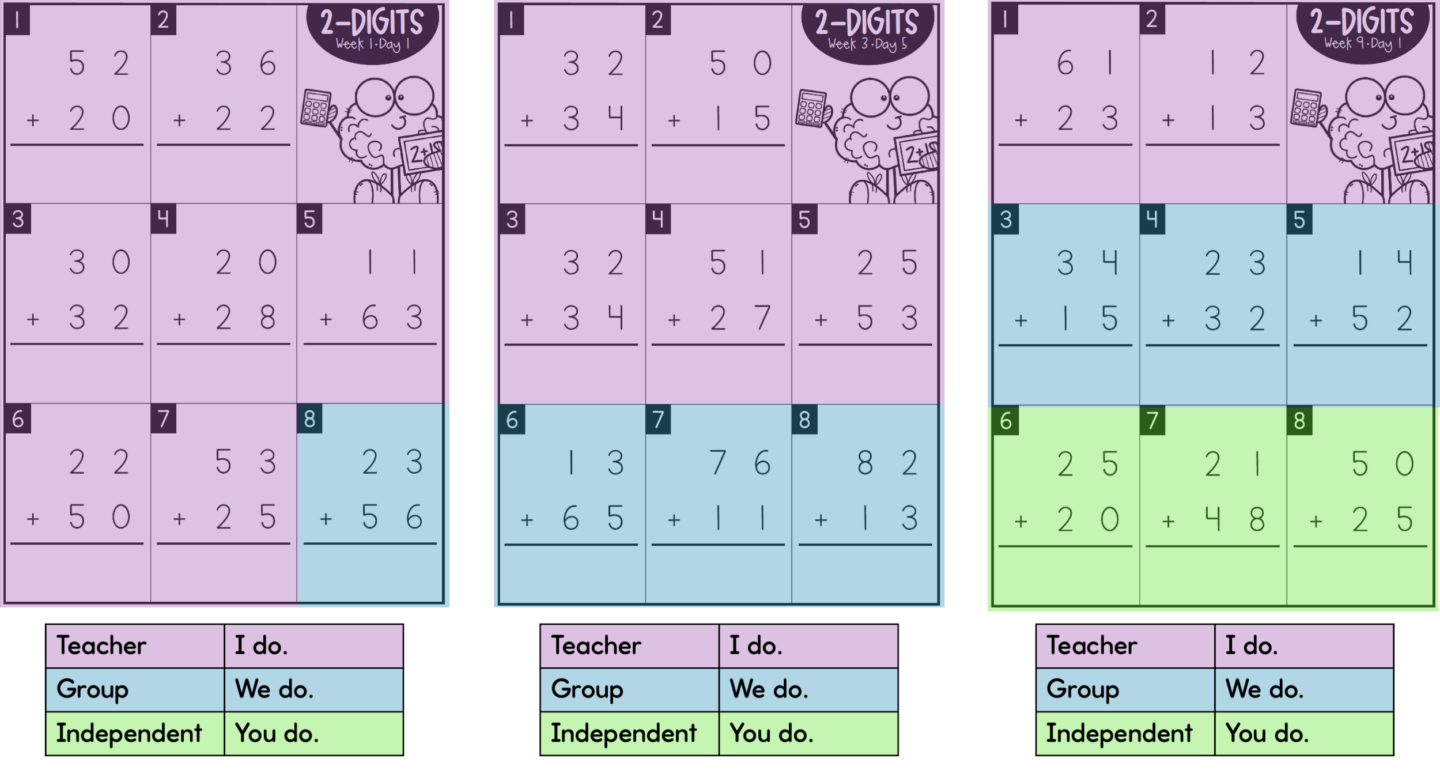
When you initially start teaching a skill (week 1), you might be doing nearly ALL of the problems.
After a few weeks (maybe late in week 3), your kids might be feeling a little more comfortable. It’s normal to start giving them a little more independence with the skill. You might do four or five problems, and then you can “turn them loose,” even though you are right there ready to prompt them.
As they are getting closer to mastery (week 9), your students might be doing all eight problems on their own. You might do one as a reminder, and then ask them to complete the rest of the page.
Here are the things I want you to know about gradual release during math intervention groups:
- I listed week 1, week 3, and week 9, but your students will need different things. There aren’t any hard and fast rules.
- Within a small group, some of your students might be ready to practice it on their own. Others might not! That’s ok. Turn them loose when it makes sense.
- Use your professional judgment to determine what your students need. It’s intervention. Don’t feel like you have to adhere to hard and fast rules. Give your students exactly what they need.
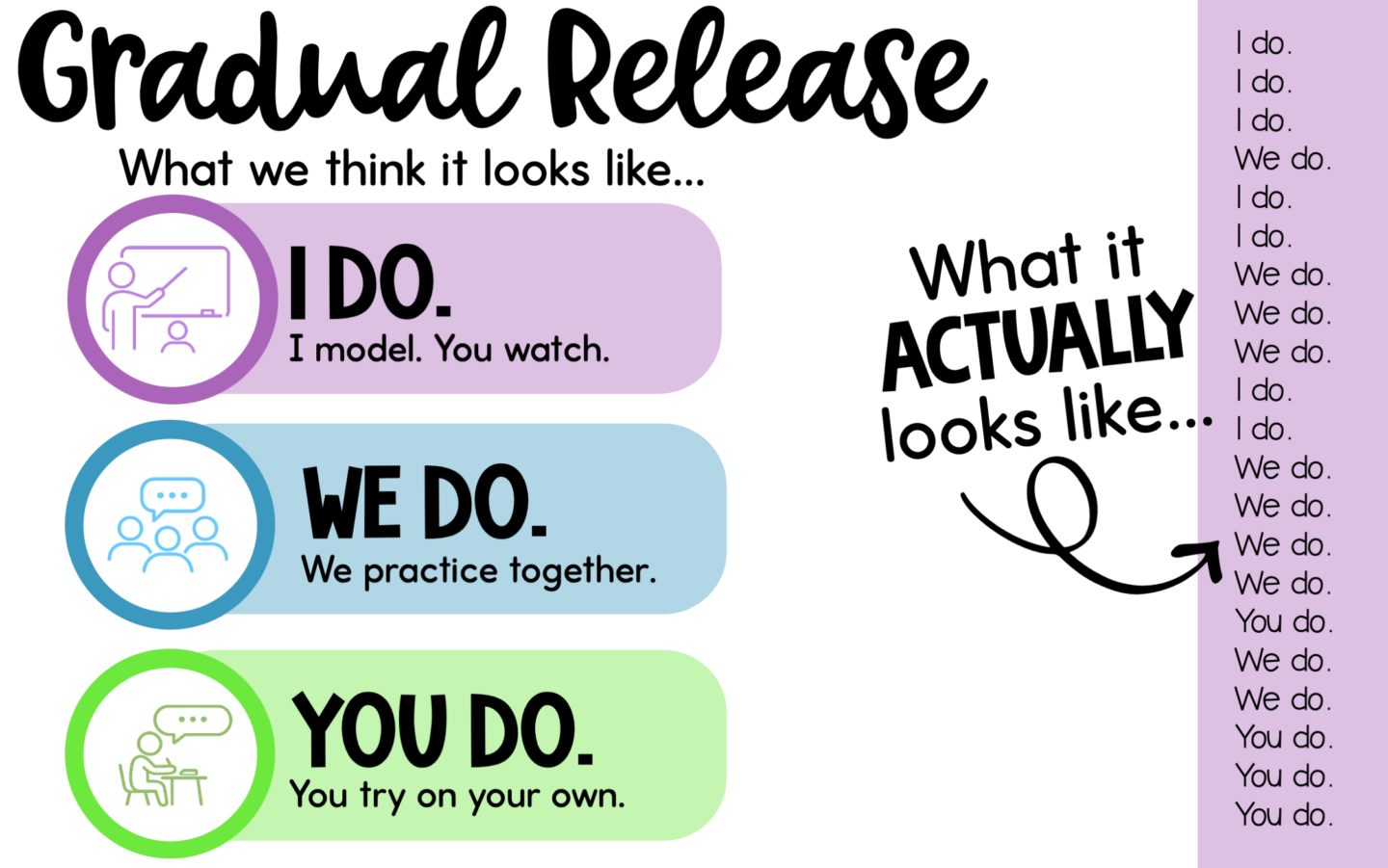
I tried to find an image of something I saw at a professional development, but I couldn’t find it. I made my own to help demonstrate what I’m thinking.
We often THINK that the gradual release model is a one-and-done situation. But it actually looks like we are going through those phases over and over and over again. Sometimes, we might think they are ready, but discover that they need a little more modeling.
This process could be happening all within one thirty-minute group, but it could also be what’s happening over a week or a month. Don’t feel like you are doing it wrong. And remember, when you are in the I do phase, tell your kids exactly what you are doing and why. Model the thinking. Explain the steps. Show them every single thing.

Immediate Feedback
In explicit instruction, one of the most important things that you can do is give immediate feedback. When a student makes an error, correct it. Take them back to the I do phase if needed. Have them recheck that math fact. Whatever is needed.
In some situations, students practice an entire math page without regrouping any subtraction problems. That isn’t helping them. That isn’t squashing misconceptions.
It’s reinforcing that WRONG way.
When you see a student making a mistake, give immediate feedback.
On the flip side, when you see a student regroup appropriately, celebrate it! When you see them using their tools to find the difference between 15 and 9, praise that. This is a huge confidence builder for our kids!
Opportunities to Respond
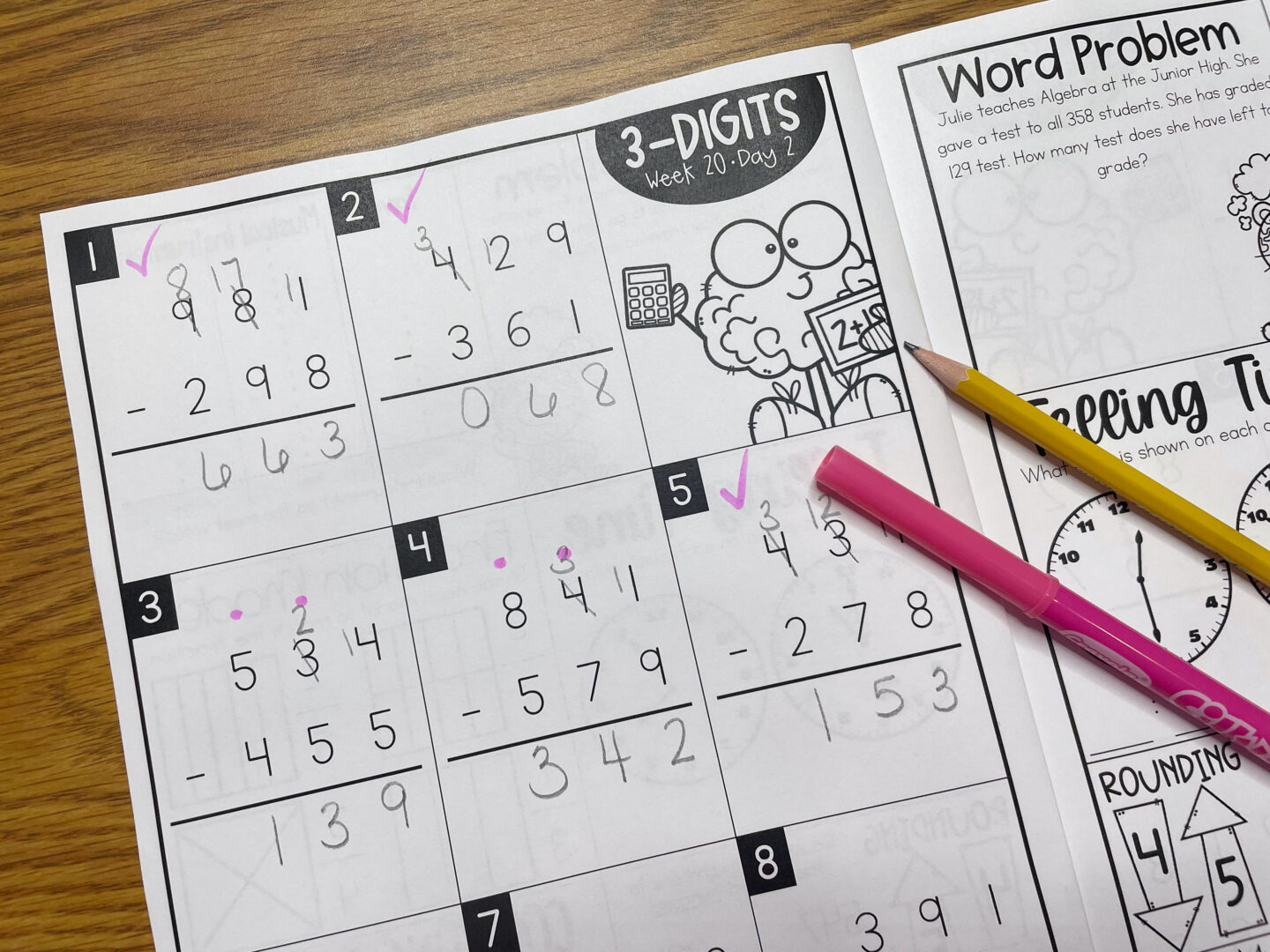
Active engagement is HUGE! Math intervention groups are perfect for incorporating as many opportunities to respond as possible. One way to do this is, especially in the we do phase, is by asking questions for each and every step.
- If I have 1, can I take away 8?
- What do I do next?
- The 8 turns into a….
- Now, this 1 turns into a…
I just generated four opportunities to respond and we have only worked through the ones place.
At the end of the day, effective math intervention isn’t about following a script. It’s about responding to your students.
Some days you’ll spend most of the lesson in the “I do” phase. Other days you’ll move quickly into guided practice or independent work. You might move back and forth between phases several times during a single lesson, and that’s okay.
What matters most is that students receive the support they need, plenty of opportunities to respond, and immediate feedback when misconceptions arise. When we model our thinking, guide students through the process, and gradually release responsibility at the right time, we help build both mathematical understanding and confidence.
Trust your professional judgment. You know your students better than anyone else. Use the data in front of you, pay attention to their responses, and don’t be afraid to adjust your instruction along the way.
Because successful intervention isn’t about getting to the “You do” phase as quickly as possible—it’s about helping students get there when they’re ready. ❤️