
Writing special education reading comprehension goals for our students can be TOUGH! However, we know that the push from parents, admin, general education teachers, and even ourselves is to improve reading comprehension. After all, that is the goal of reading.
Reading comprehension goals are some of the most common goals included in an IEP. However, before we jump into writing a goal, we need to make sure we are targeting the right skill. Sometimes a reading comprehension goal is exactly what a student needs. Other times, the real problem is decoding, vocabulary, or background knowledge.
Is Comprehension Really the Problem?
I know that you clicked on this link because you want ideas for writing better reading comprehension goals. And I’ll get there, I promise. But before you write that goal, really ask yourself if that is the true area of deficit.
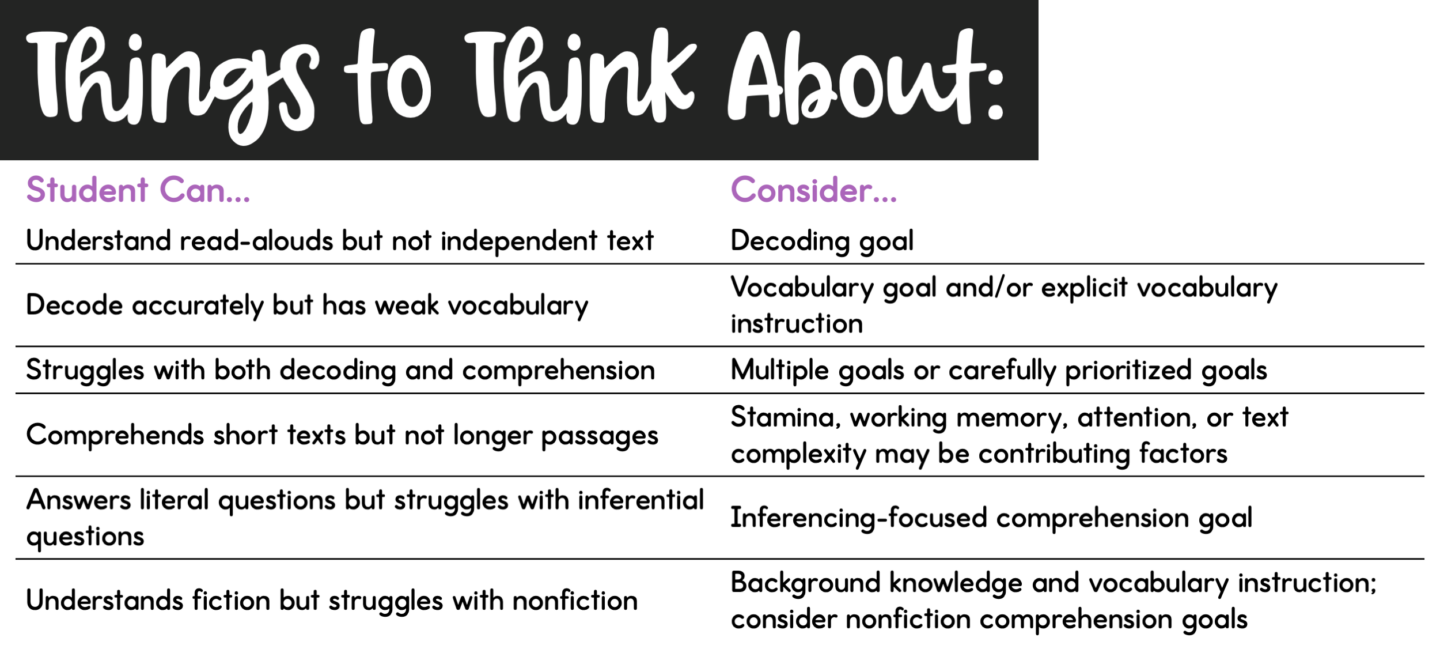
Sometimes students can decode every word on the page but still struggle to understand what they read. In those cases, vocabulary may be the true barrier. Before writing a reading comprehension goal, consider whether the student understands the key words and concepts within the text.
Special Education Reading Comprehension Goal Formula
As you know, I have a Google Doc bookmarked on my computer where I am always keeping things that I can copy, paste, and customize later. This formula is there and I use it a lot with my upper elementary students. I’ll paste it below so you can copy it to your bank of IEP goals.
By the end of the IEP year, when given a [fictional/nonfictional] reading passage at [insert reading level/measure], [Student] will be able to [independently/with support/with…..] answer [multiple choice/open ended] comprehension questions where they are required to answer [basic recall/inferential] questions with [percentage] accuracy.
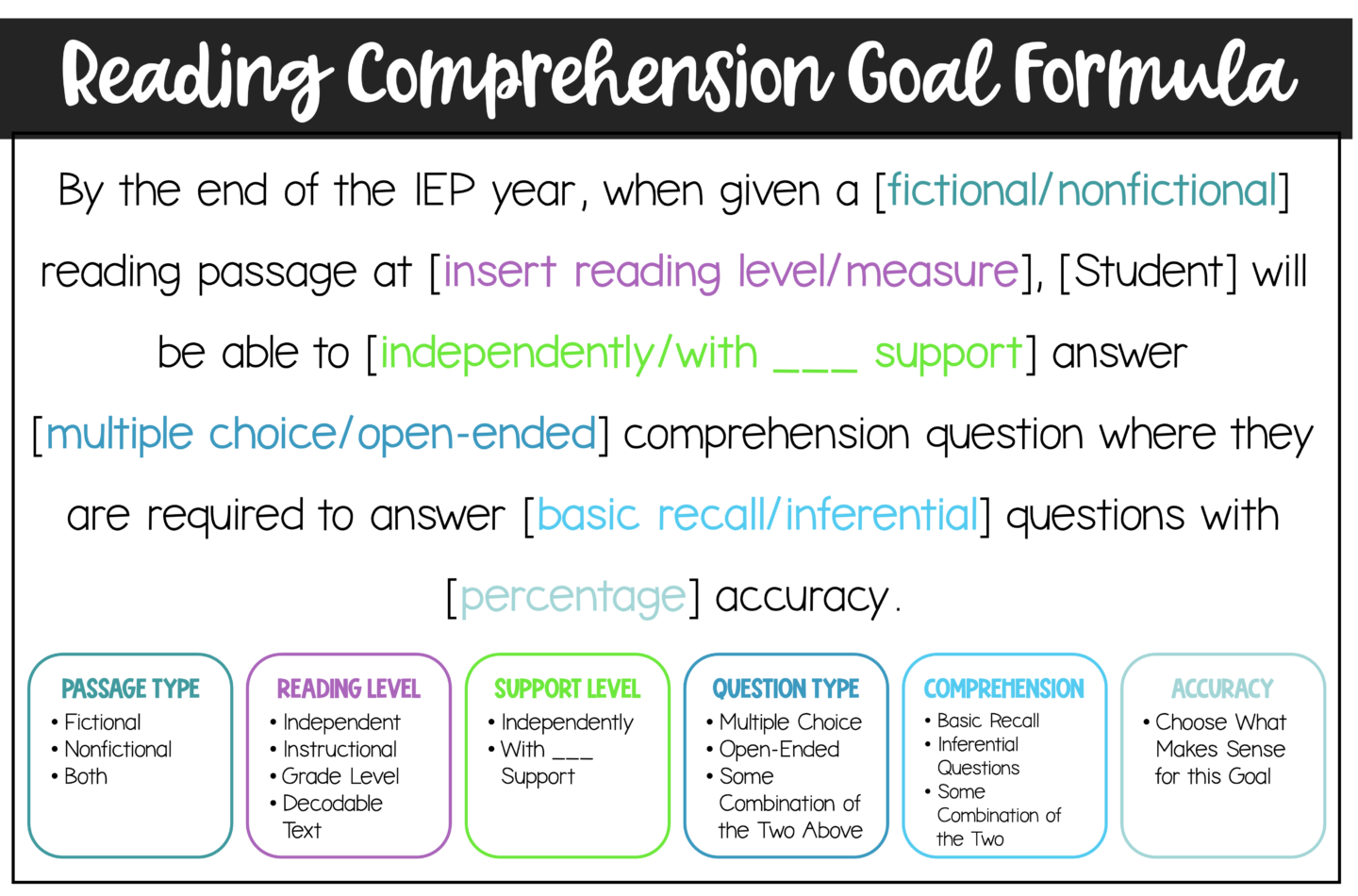
Now, let’s break down each piece of that formula to help you make choices about what your student needs.
I wish I could make those drop downs for you and it still be copy and pasteable. 😂
Passage Type
What types of passages is your student struggling with most. Sometimes, the lack of background knowledge and vocabulary included in nonfiction can really throw our kids for a loop. Whereas, inferring feelings and thoughts in fiction can be problematic for others.
What areas is YOUR student struggle with?
- Fiction
- Nonfiction
- Both
Reading Level
This is often hard to capture in words, and I swear I change the direction of my goals often. What will you be able to assess regularly? What is available to you? What are you teaching them each day? Don’t ask them to read something at their grade level if you aren’t actively using grade level materials or if this isn’t in a realistic zone of their reading abilities.
- Independent
- Instructional
- Frustrational
- Lexile
- Grade Level
- Decodable Text
- School Specific Color, Name, or Number
Support Level
I think the goal of reading is to be independent, so I typically word my goals with the word independently. However, there are always students who require additional supports. Add those where necessary!
- Independently
- With Teacher Support
- With Picture Support
- With ____ Scaffold
Question Type
There is a BIG difference between a multiple choice style question and someone needing to answer something open-ended. Choose wisely. Again, what will you be doing in your group? What are they ready for?
- Multiple Choice
- Open-Ended
- Some Combination of the Two Above
Comprehension
In addition to the WAY the student responds, we must also think about what those questions will be asking. For some students basic recall is more than appropriate based on their current level. For others, focusing on the ability to make inferences and put that into words is more appropriate.
- Basic Recall
- Inferential Questions
- Some Combination of the Two
Accuracy
I don’t know where on Earth 80% came from, but we all hopped on that bandwagon and used it. If that’s appropriate for the student, go for it! If not, that’s ok. Feel free to adjust and use a different percentage that makes sense with the assessments that you plan to give.
Common Mistakes to Avoid
- Writing a comprehension goal for a student who cannot read the text yet. If a student can answer comprehension questions when text is read aloud, but cannot answer those same questions when reading independently, the issue may be decoding rather than comprehension.
- Asking students to make inferences when they aren’t able to recall basic information from the text.
- Writing a generic goal and then wondering how you are going to progress monitor it later.
- Using assessments that don’t match the instruction that you’re delivering each day.
There isn’t one perfect special education reading comprehension goal that works for every student. The best goals are individualized, measurable, and aligned with the instruction you are providing each day. By thinking carefully about the passage type, reading level, supports, question format, and comprehension skill, you’ll create goals that are easier to teach, assess, and progress monitor throughout the year.